Summer 2026
The Center for Biomedical Science & Policy (CBSP)
Schar School of Policy and Government
George Mason University
Location:
Hybrid format: virtual synchronous sessions and an in-person conference at George Mason University (Arlington Campus)
Program Dates:
June 24 – July 29, 2026
- Four-week Online Synchronous Sessions:
June 24 – July 15, 2026 (Weds, 9:00–11:00 AM EST) - Weekly Research Assignments with support from PhD research assistants
- National Students Data Analytics and Biomedical Conference:
July 22, 2026, at George Mason University (Arlington Campus)
Students will present original research findings in a formal academic conference setting. A panel of GMU faculty and biomedical industry experts will evaluate presentations and select top-performing teams for awards. - Research Feedback and Office Hours (optional, RSVP):
June 24 – July 28, 2026 - Final Research Paper Submission:
July 29, 2026 - Enrollment:
Limited to 10–25 students
Registration Fee:
Please email [email protected] for application and program fees.
Limited need-based scholarships are available.
Certification and Recognition:
Students who successfully complete the program will receive an official CBSP Young Scholars Research Program Certificate of Completion and present their research in a competitive academic conference setting at the National Students Data Analytics and Biomedical Conference, where outstanding projects are formally recognized.
Program Summary
The Young Scholars Research Program is designed for high-achieving high school and undergraduate students seeking to engage in advanced research at the intersection of biomedical science, and data analytics. Participants will collaborate with faculty members at George Mason University in interdisciplinary teams of 3–4 students, comprising both high school and undergraduate participants.
At the beginning of the program, students will be assigned to research teams based on their project preferences. Each team is expected to produce two major outputs by the end of the program:
(1) a final research paper to be published on the Center for Biomedical Science & Policy https://cbsp.schar.gmu.edu/ and the Schar School Young Scholars Journal https://mars.gmu.edu/communities/a14681bb-5fac-4b0e-84ba-05333991fed9
(2) a conference presentation delivered at the National Students Data Analytics and BioMedical Conference (NSDAB).
Throughout the program, participants will engage in hands-on research using a range of methodologies, including R/Python programming and large language models (LLMs), to conduct biostatistical analysis and network modeling. This immersive experience is designed to develop both technical and research-oriented skills in biomedical and policy-relevant contexts.
Program Goals
Each participant will work collaboratively on a research project alongside peers and advanced undergraduate and graduate mentors. Students will gain proficiency in research tools, data analysis techniques, and the application of computational methods to biomedical research questions.
Specifically, participants will learn how to:
- Formulate research questions
- Access and collect relevant data
- Conduct statistical and computational analyses
- Develop professional research reports and manuscripts
- Present research findings in academic and professional settings
Program Benefit
- Conduct rigorous research at the intersection of biomedical science and data analytics
- Collaborate with faculty and interdisciplinary peers in a structured academic setting
- Explore academic and career pathways in medicine, data science, and public policy
- Build networks with scholars and industry experts in biomedical science and policy
- Strengthen college profiles through research, publication, and presentations
Research Projects Highlights and Features
Our Course Directors, Drs. Naoru Koizumi, Megumi Inoue, Li-Mei Chen and Meng-Hao Li, along with Project Advisors Drs. Jorge Ortiz MD, Giovanni Faddoul MD, Liise Kayler MD, Obi Ekwenna MD, Ali Andalibi, Mehdi Nayebpour and PhD candidates Olzhas Zhorayev, Neelam Shukla, and Furhad Nasserjah:
Will lead students in research projects across the following areas:
- Biostatistical analysis of transplant outcomes and chronic disease conditions, including kidney transplantation among patients with Crohn’s disease, ulcerative colitis, focal segmental glomerulosclerosis, and end-stage renal disease (ESRD)
- Statistical analysis of healthcare utilization and policy-relevant outcomes, including advance care planning and emergency department use among ESRD patients
- Network analysis of global supply chains and illicit medical systems, including plasma trade dependencies and transnational kidney trafficking networks
- Application of large language models to evaluate and synthesize medical research, including prompt optimization and systematic review methodologies
- Integrated computational approaches using R/Python programming for biostatistics, network analysis, and AI-driven research
Summer 2026 Tentative Research Projects Include:
- Kidney Transplant Outcomes among Patients with Crohn’s disease or Ulcerative Colitis (Skills acquired: Biostatistical analysis and R programming)
- Kidney Transplant Outcomes among Patients with Focal segmental glomerulosclerosis (Skills acquired: Biostatistical analysis and R programming)
- Quantifying Global Supply Chain Risks in the US-Centric Plasma Export Network (Skills acquired: Network analysis and R programming)
- Mapping Transnational Illicit Kidney Networks through the Costa Rican Broker-Clinic Nexus (Skills acquired: Network analysis and R programming)
- Advance Care Planning and Emergency Department Utilization among ESRD Patients (Skills acquired: Biostatistical analysis and R programming)
- The Evolution of Digital Advance Care Planning: A Systematic Review of the Transition from Traditional Mobile Apps to Large Language Models (Skills acquired: Basic LLMs)
- Optimizing Large Language Model Prompt Strategies for Quality Assessment of Medical Research Posters (Skills acquired: Basic LLMs and R programming)
- Trend and Time Series Analysis of US Transplants Paid by Foreign Governments (Statistical Analysis and visualization)
The final research paper will be published on the Center for Biomedical Science & Policy website as well as the Schar School Young Scholars Journals webpage (processing time: 3~5 months).
Course Directors
Dr. Naoru Koizumi is a Professor and the Associate Dean for Research at Schar School of Policy and Government. Her work intersects public policy, systems engineering, and health/medical bioinformatics and ethics, with particular interests in kidney transplantation and allocation policy as well as global kidney trade networks and trafficking. Her research focuses on the applications of various quantitative methods including biostatistics, Geographic Information Systems (GIS), simulation and mathematical optimization to analyze various clinical and policy questions under multiple NIH- and NSF-funded projects. She is currently leading large-scale NSF-funded awards that optimizes a kidney paired donation (KPD) system (NSF – IIS/ENG: SCH: / 2123683) and that builds a model to identify patterns/behaviors common to organ trafficking and design intervention strategies (NSF – CMMI/ENG: D-ISN: / 2146067). Under these awards, she has published multiple articles including those listed below. In these works, she and her team utilize quantitative methods such as: 1) social network analysis (SNA); 2) the Network Scale-Up Method (NSUM); and 3) AI / large language models (LLMs) + retrieval-augmented generation (RAG).

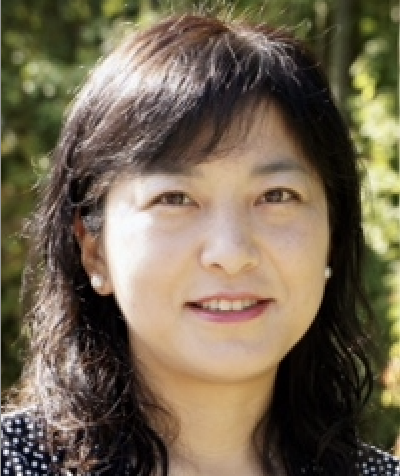
Dr. Megumi Inoue is a Professor in the Department of Social Work. Her research primarily focuses on older adults experiencing declining health, placing them at risk of losing autonomy and dignity. The deterioration of physical and/or cognitive abilities in older adults could significantly threaten their right to make decisions and be treated with respect. Dr. Inoue’s research aims to identify ways to prevent such unfortunate situations and to provide support for these vulnerable older adults and their family members. Dr. Inoue earned a Ph.D. from Boston College (Graduate School of Social Work), an MSW from Washington University in St. Louis (Brown School of Social Work), a BSW from Kawasaki University of Medical Welfare in Japan (Department of Medical Social Welfare), and an ADN from Kyushu University in Japan (College of Medical Technology Department of Nursing).
Dr. Li-Mei Chen is Assistant Professor in the Department of Social Work, College of Public Health. Chen’s teaching and research focuses on dementia and aging, productive aging (volunteer, caregiving, self care, and employment), intersectionality and role of lifecourse in older ethnic minorities, community gerontology, and social policy. Among her recent projects included hosting an international seminar on person-centered care for dementia, several case studies on community-based strategies for civic engagement of older adults and the role of structural injustices and social exclusion on minority health and well-being. Before coming to Mason, Chen taught social work at Columbia University, University of Houston, Washington University in St. Louis, Kwansei Gakuin University (Japan), and Yokohama City University (Japan).

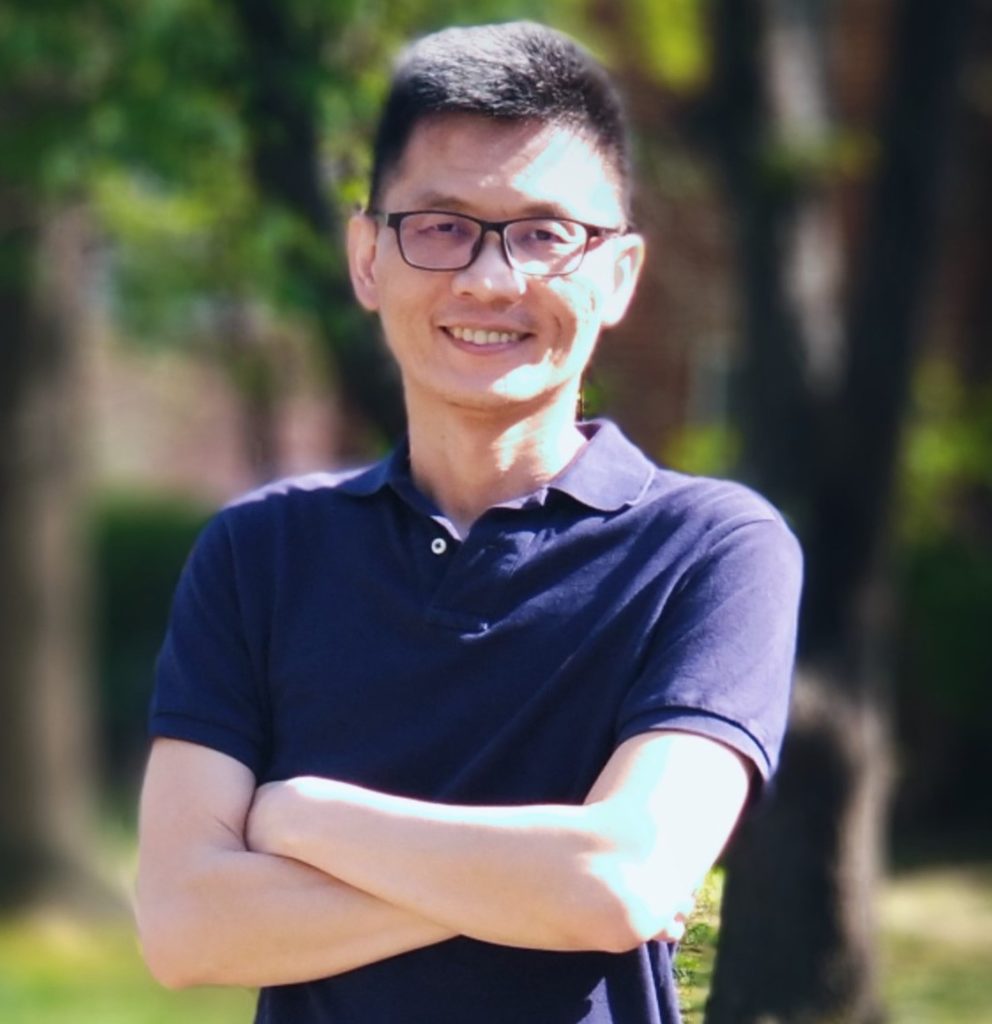
Dr. Meng-Hao Li is Deputy Director of the Center for Biomedical Science and Policy at Schar School of Policy and Government. His work focuses on organ transplantation, health policy, and large-scale data analytics, and he has extensive experience working with national health datasets, including National COVID Cohort Collaborative, Healthcare Cost and Utilization Project, United States Renal Data System, and United Network for Organ Sharing. His research integrates health policy, machine learning, large language models, and network analysis to address complex biomedical challenges. Dr. Li’s work lies at the intersection of data and decision-making. He has led or contributed to more than 45 peer-reviewed publications such as BMJ Global Health, International Journal of Health Geographics, Journal of Applied Gerontology, JMIR AI, JMIR Infodemiology, and Social Science & Medicine.
Project Advisors
- Dr. Jorge Ortiz MD: Department of Surgery, Garnet Health Medical Center
- Dr. Giovanni Faddoul MD: Department of Medicine, Division of Nephrology, Albany Medical College
- Dr. Liise Kayler MD: Program Director Kidney and Pancreas Transplantation, Chief of the Division of Transplant Surgery, Jacobs School of Medicine & Biomedical Sciences, University at Buffalo
- Dr. Obi Ekwenna MD: Department of Urology & Transplant, The University of Toledo Medical Center
- Dr. Ali Andalibi: Vice Provost for Research, Charles R. Drew University of Medicine and Science; Affiliate, George Mason University (College of Science; Schar School of Policy and Government); Affiliate, UCLA Clinical and Translational Science Institute
- Dr. Mehdi Nayebpour: Virginia BioAnalytics
- Mrs. Neelam Shukla: PhD candidate, Public Policy, Schar School of Policy and Government, George Mason University
- Mr. Furhad Nasserjah: PhD candidate, Environmental Science and Public Policy Department, College of Science, George Mason University
- Mr. Olzhas Zhorayev: PhD candidate, Public Policy, Schar School of Policy and Government, George Mason University